By Florence Basile
Jobs are hard to find in the film industry. Many aspiring filmmakers say they’ll work on any set they can get, even those of reality television. After watching the pilot of UnReal, I’m not so sure. I’ve worked as a production assistant on a few commercial sets and while it is clear that the show exaggerates the poor treatment of production assistants, it is a drama after all, other instances were quite frightening. This made me wonder: is it that simple to categorize a dynamic show like UnReal into the genre of a drama? As Jason Mittell explains in his essay, A Cultural Approach to Television Genre Theory, “linking together these numerous discourses will begin to suggest more large-scale patterns of generic definitions, meanings, and hierarchies, but we should arrive at these macro-features through as analysis of micro-instances” (9). I’d like to take Mittell’s views of television discourse and apply it towards UnReal.
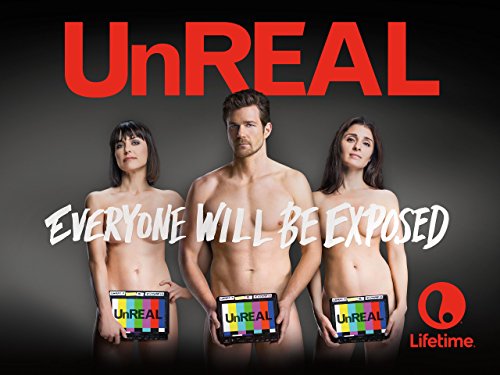
Production discourse was prevalent in this drama, commenting on the making of reality shows like ABC’s Bachelor and Bachelorette (in UnReal, the show was called Everlasting). It’s all a forced reality. At one point, the main character, Rachel, played by Shiri Appleby, blended into the set and used the contestants’ personal information to manipulate them into creating drama. With the help of Rachel, the producer of the show, Quinn, played by Constance Zimmer, strives to please consumers, making characters such as “the villain” and “the MILF” out of the contestants’ actions. Racial discourse was also apparent through the production discourse in the pilot of UnReal, with Quinn claiming that viewers want to see a white woman presented first to the bachelor. Who’s to blame? This is what consumers want, right?
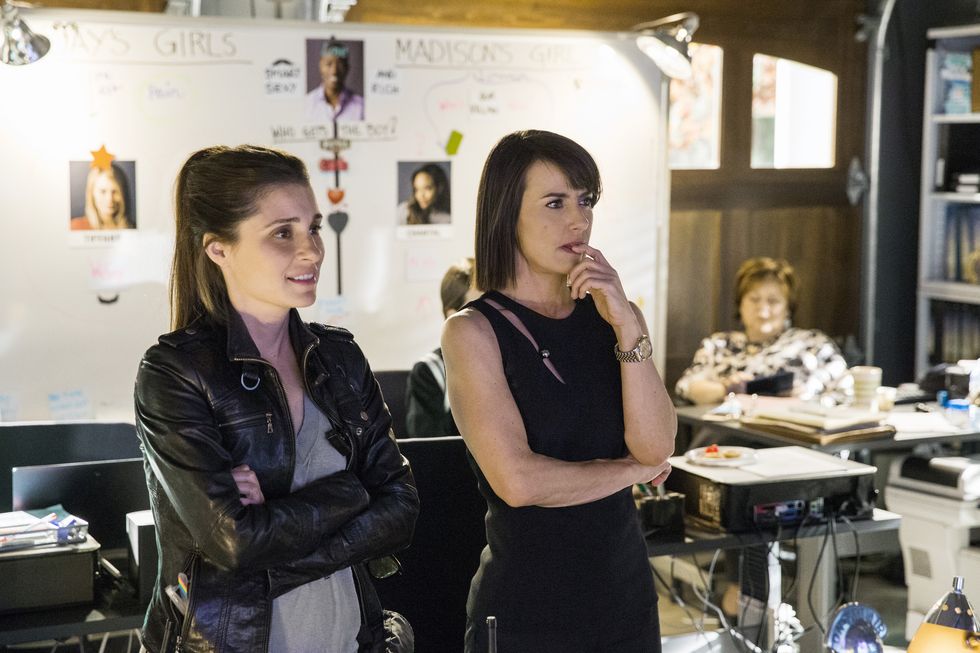
The power dynamics presented in the pilot are another example of production discourse, made clear through the relationship between the creator and producer of the show. The creator, Chet, played by Craig Bierko, is presented as a bit of a slob. While his relationship with the producer of the show is unclear in the first episode, there is a scene where they’re having sex after Chet calls her to his office. It is not loving, with Chet in a dominant position as Quinn is turned away from him. Instantly, I viewed Chet’s character as a representation of powerful men in the industry who use their power to take advantage of women working below them, like Harvey Weinstein. Having watched the pilot nine years after it came out in 2015 and after the MeToo movement began in 2017, according to Mittell I watched the show with a certain historical perspective. As women didn’t start speaking up about Weinstein until two years after the pilot aired, this scene emphasizes how instances like this had been a problem for a longtime. This “micro-instance” was a piece of the “macro-feature” of the show, exposing production discourses in reality television.
The show UnReal exposes the discourses of reality television through a fictional narrative. It’s a drama, commenting on reality television. After watching the show, I’m not quite sure that I’d work as a production assistant on the set of a show like Everlasting – especially if they’d make me pick up trash in disguise as a convicted crew member. But, that’s just me.
One reply on “The Reality of Reality TV through UnReal”
Hi Florence!
I agree that it’s difficult to categorize UnReal as simply a drama because it is a show within a show. Although the two bleed together, I found myself watching Everlasting both as its own show and as part of the plot of UnReal. Reading your post made me think about how the two layers of the show work together and what the two genres (though one is a fictional representation of reality television) gain and sacrifice when combined. Obviously, Everlasting borrows the language, aesthetic, and structure of The Bachelor. As someone who has watched a lot of The Bachelor franchise and consumed a lot of discourse surrounding it, thinking about how producers advise and manipulate contestants and how editors string together footage to craft a narrative is part of the viewing experience. Reality television has its own operational aesthetic and as you become increasingly familiar with it, the not-so-invisible hands of the producers become apparent. In UnReal, the production discourse (and the various discourses about race, gender, desirability, etc. that result from it) and the power dynamics of the set that you describe force characters into moral compromises, which makes for compelling drama. But I found the layered narrative to be overwhelming because it made the operational aesthetic fit the narrative arc and emotional notes of a drama. The show did the work of what I find fun about watching The Bachelor and forced it within the conventions of television drama, which for me, made it less compelling.
-Maya