Categories
Uncategorized

GIRLBOSS and SURGEON since the Opening Credits

Written by Florence Basile

Opening credits can say a lot about the show a viewer is about to watch. Whether they are introducing a show like Friends, with a catchy theme song playing along goofy clips of the six main characters, or a show such as Criminal Minds, with eerie music over shots of agents solving cases, opening credits have more to say than we may think.

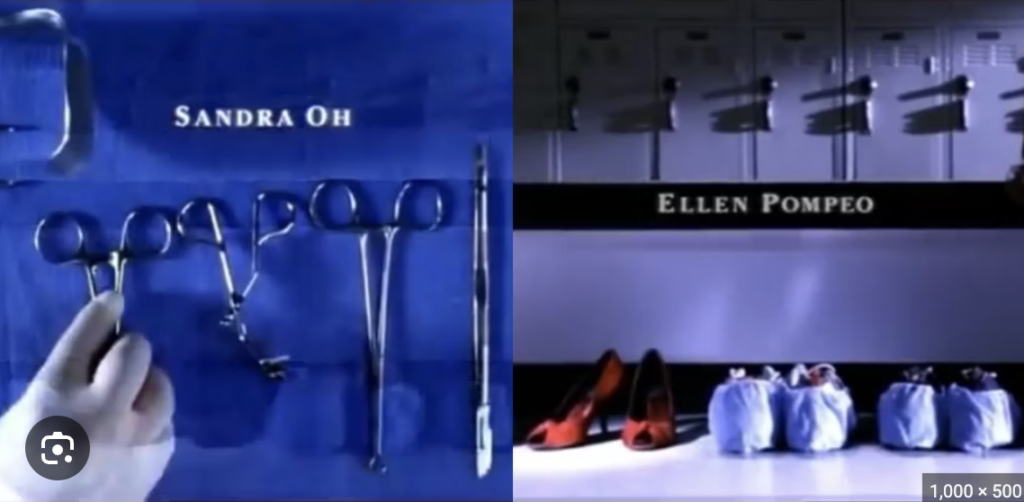
In Elana Levine’s article “Grey’s Anatomy, Feminism,” the author discusses how the show Grey’s Anatomy allows “us to imagine a world in which identity-based discrimination has been defeated to women’s benefit, rather than at their expense” through a postfeminist cultural environment (140). The opening credits give us a sense of this from the get-go. With a pair of stilettos beside sanitized shoes and an eyelash curler among surgical tools, the audience can tell that the show will follow women in the field of medicine. Going against stereotypes, it also emphasizes how the two coincide. In season one, episode four of Grey’s Anatomy, called “No Man’s Land,” we see the character Izzie standup to Alex after he hung numerous photos of her modeling as ‘Bethany Whisper’ in the locker room. There’s a powerful moment when Izzie strips down to her underwear and points out that it’s all flesh. It’s not sexual at all (huh, surprising). Their job is working with people, with bodies – it’s all just anatomy. She then sticks it to them that she graduated medical school free of debt while everyone else has thousands of dollars in loans to pay off. She can be a GIRLBOSS and a SURGEON! No compromise necessary. With each and every episode, the opening credits remind us of that.

Categories
Uncategorized

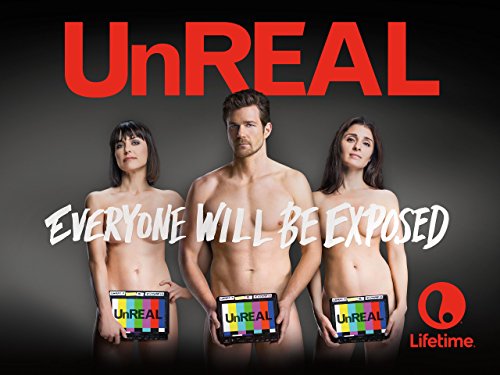
The Reality of Reality TV through UnReal

By Florence Basile

Jobs are hard to find in the film industry. Many aspiring filmmakers say they’ll work on any set they can get, even those of reality television. After watching the pilot of UnReal, I’m not so sure. I’ve worked as a production assistant on a few commercial sets and while it is clear that the show exaggerates the poor treatment of production assistants, it is a drama after all, other instances were quite frightening. This made me wonder: is it that simple to categorize a dynamic show like UnReal into the genre of a drama? As Jason Mittell explains in his essay, A Cultural Approach to Television Genre Theory, “linking together these numerous discourses will begin to suggest more large-scale patterns of generic definitions, meanings, and hierarchies, but we should arrive at these macro-features through as analysis of micro-instances” (9). I’d like to take Mittell’s views of television discourse and apply it towards UnReal.

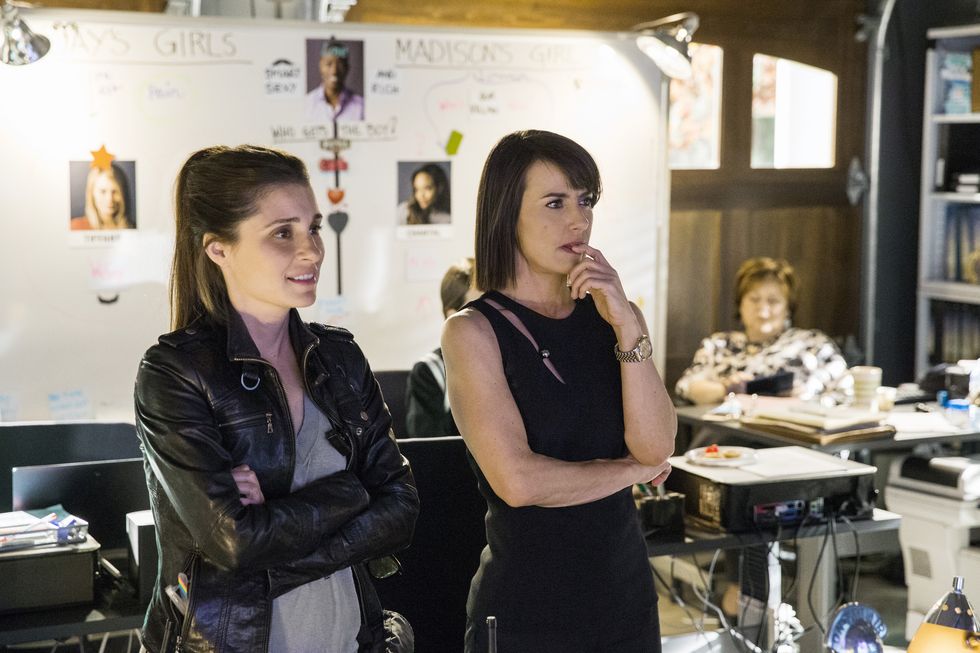
Production discourse was prevalent in this drama, commenting on the making of reality shows like ABC’s Bachelor and Bachelorette (in UnReal, the show was called Everlasting). It’s all a forced reality. At one point, the main character, Rachel, played by Shiri Appleby, blended into the set and used the contestants’ personal information to manipulate them into creating drama. With the help of Rachel, the producer of the show, Quinn, played by Constance Zimmer, strives to please consumers, making characters such as “the villain” and “the MILF” out of the contestants’ actions. Racial discourse was also apparent through the production discourse in the pilot of UnReal, with Quinn claiming that viewers want to see a white woman presented first to the bachelor. Who’s to blame? This is what consumers want, right?

The power dynamics presented in the pilot are another example of production discourse, made clear through the relationship between the creator and producer of the show. The creator, Chet, played by Craig Bierko, is presented as a bit of a slob. While his relationship with the producer of the show is unclear in the first episode, there is a scene where they’re having sex after Chet calls her to his office. It is not loving, with Chet in a dominant position as Quinn is turned away from him. Instantly, I viewed Chet’s character as a representation of powerful men in the industry who use their power to take advantage of women working below them, like Harvey Weinstein. Having watched the pilot nine years after it came out in 2015 and after the MeToo movement began in 2017, according to Mittell I watched the show with a certain historical perspective. As women didn’t start speaking up about Weinstein until two years after the pilot aired, this scene emphasizes how instances like this had been a problem for a longtime. This “micro-instance” was a piece of the “macro-feature” of the show, exposing production discourses in reality television.

The show UnReal exposes the discourses of reality television through a fictional narrative. It’s a drama, commenting on reality television. After watching the show, I’m not quite sure that I’d work as a production assistant on the set of a show like Everlasting – especially if they’d make me pick up trash in disguise as a convicted crew member. But, that’s just me.

Categories
Uncategorized

Go with the Flow of Television, Even if that means Commercials

Written by Florence Basile

Growing up, I always knew how to avoid watching ads on cable: just letting them run while going about my business, muting the TV, or (and this is the best option) pausing and then trying to press play right when it started again. The other day I was watching Only Murders in the Building on Hulu, to which I have the lowest subscription possible and therefore commercial breaks are part of the bargain (basically a modern version of cable), and found that someone ratted us out! No longer can I avoid watching commercials by pausing and skipping ahead. Instead, I’m forced to sit through them. But hey, we all know that by this point I’m too hooked to stop watching. I guess I’ll just go with the flow…

Let’s just say that I wanted to watch the newest episode of season 46 of Survivor. Let’s also say that I wanted a blast from the past where my whole family gathers around the TV at 7pm to watch it live on the broadcast network CBS. If my Television Studies Seminar class counts as my family, then I did just that. Even more so, because I watched an approximately 60 minute show in 90 minutes. Thank you commercials!

Consumers are often oblivious to the interaction occurring between their show and the array of “random” commercials. I’ve decided to narrow down what I observed while watching CBS to a 20 minute segment that aired from 7:57pm to 8:17pm. Of that 20 minutes, I watched 11 minutes of Survivor and 9 minutes of commercials. However, this came as no surprise to me. I was an hour into the program and hooked – CBS showrunners simply took advantage of that. Even with the abundance of commercials, 19 to be exact, I had to know what would happen next on Survivor.

From 7:57pm to 8:02pm, I watched 5 minutes of drama unfold. The purple team, winner of that episode’s challenge, discussed who they wanted to vote off of the show – MORIAH or VENUS?! At one point, a banner appeared advertising CBS’s streaming of the CMT Music Awards; there had been an advertisement regarding this in the previous commercial break. It didn’t appear at a random moment in the episode, but when the suspense was at its peak, when CBS knew I was at the edge of my seat.

Then, commercials returned from 8:02pm to 8:06pm. In addition to a Chewy, Progressive, and Twizzler commercial, I was reminded that CBS’s The Amazing Race was coming up next and that CBS had new episodes of Elsbeth being aired the next day. Both CBS trailers were televised last when it was most likely that viewers would be returning to their seats before Survivor began again.

I watched 6 more minutes of Survivor, with tensions rising as it came time for tribal council night, until another commercial break came on. I noticed that the target age group of the advertisements widely ranged just as the show Survivor’s does. Several aired, some for medications and others for dog food or insurance. Halo on Paramount+, a platform I later learned is owned by CBS, was promoted through a trailer. Just as the CMT Music Awards banner was displayed during the show, the Survivor industry advertised their show’s new virtual reality game during the commercials. Towards the end, CBS showed trailers for what they’d be streaming in the future such as Finding MN, Fire Country, a Billy Joel concert, and Elsbeth. This was the second time that Fire Country was being advertised and I noticed that it was a quick snippet compared to the first. In fact, I found that with all the shows CBS needed to promote, the full-length trailers were shown in the first few commercial breaks when everything was still fresh for the viewer (perhaps when they didn’t need a bathroom break quite yet). The following would be shorter, acting as a reminder.

For better or for worse, commercials create a different kind of viewer experience. The experience is not random, of course, but has a thoroughly, curated flow. Even the reality TV-show Survivor is not 100% reality with a selection of shots and angles meticulously put together to evoke certain emotions in the audience. With advertisements placed throughout and within, CBS hopes that a consumer will buy a pack of twizzlers and watch an episode of Elsbeth or Fire Country afterwards. I mean… I’m in!